Las Palmas de Gran Canaria operates on a different schedule from most European cities. One that suits it considerably better.
When the afternoon heat softens — which it does reliably, even in the height of summer — the city doesn’t slow down. It shifts. The paseo of Las Canteras fills with joggers, families, and couples who materialise as if from nowhere. Terrace restaurants lower their awnings and begin filling their tables. The Atlantic, which spends the daylight hours in constant negotiation with the breeze, settles into something close to stillness, reflecting the colours of the sky above the Isleta peninsula in long, slow smears of copper and pink.
This is a city with one of the finest urban beaches in Europe, a colonial old quarter that the UNESCO nomination committees keep returning to, a port that has hosted Atlantic crossings since the age of exploration, and access to some of the darkest skies in the Canary Islands once you leave its limits. It is not, in other words, a city with a single evening mode.
The things to do in Las Palmas de Gran Canaria at night cover a spectrum that most visitors don’t fully explore: from ocean-fresh fish eaten outdoors within earshot of the surf, to live music on the Santa Catalina terraces, to standing in the rural interior of the island under a sky so dark that the Milky Way is structural rather than decorative.
This guide is for the traveller who wants all of it, or at least the best of it, and isn’t satisfied with the surface version.
Why Las Palmas Is Even More Magical After Sunset
Gran Canaria sits at 28 degrees north latitude — close enough to the Tropic of Cancer that the sun sets with purpose. There’s no extended twilight here in the northern European sense. The sky goes through its transitions quickly and definitively: gold, then amber, then the brief blue hour that photographers plan entire trips around, then night. And because the island’s position in the Atlantic gives it an unobstructed western horizon over the ocean, every sunset is a proper one — nothing blocking the moment the sun hits the water.
The climate is the other factor. Las Palmas earns its reputation as the City of Eternal Spring not through marketing but through simple meteorology: the trade winds that funnel between Gran Canaria and Tenerife moderate temperatures year-round, rarely allowing the thermometer to climb above 30°C in summer or drop below 15°C in winter. Evening temperatures sit comfortably around 18–23°C for most of the year. You don’t need a jacket, but you don’t need to escape the heat either. It is a temperature that encourages lingering.
Las Palmas nightlife is often described in terms of bars and clubs — and those exist, concentrated around the Triana neighbourhood and the Santa Catalina area — but the more interesting evening culture of the city operates at a more leisurely pace. It is the culture of the late dinner, the terrace conversation that extends well past midnight, the slow walk along the seafront with no particular destination. It is Spanish in its structure and Atlantic in its spirit.
And then there is what happens when you leave the city behind. The interior of Gran Canaria — the mountainous, sparsely populated terrain that rises toward Roque Nublo and the calderas of the island’s volcanic past — provides access to skies that put most of continental Europe to shame. The Caldera de Bandama, an ancient volcanic crater just twenty minutes from the city, is one of the island’s best-known astronomical observation points. From certain positions in the island’s interior, the light of Las Palmas itself becomes a distant suggestion on the northern horizon, and the sky above closes in with everything the Atlantic Ocean and the Canary Islands’ light protection laws have conspired to preserve.
This is the city in full. Both versions of it.
1. Go Stargazing Beneath Gran Canaria’s Dark Skies
What the Canary Islands have always known, and most visitors discover too late.
The Canary Islands did not become home to some of the world’s most important astronomical observatories by accident. The Instituto de Astrofísica de Canarias (IAC), which operates major facilities on Tenerife and La Palma, selected the archipelago on the basis of sky quality — transparency, atmospheric stability, the number of clear nights per year, and the low level of light pollution relative to observing altitude. Gran Canaria shares that same Atlantic position, the same trade wind meteorology, and the same protective legislation that has made the Canary Islands one of the premier astronomical territories on Earth.
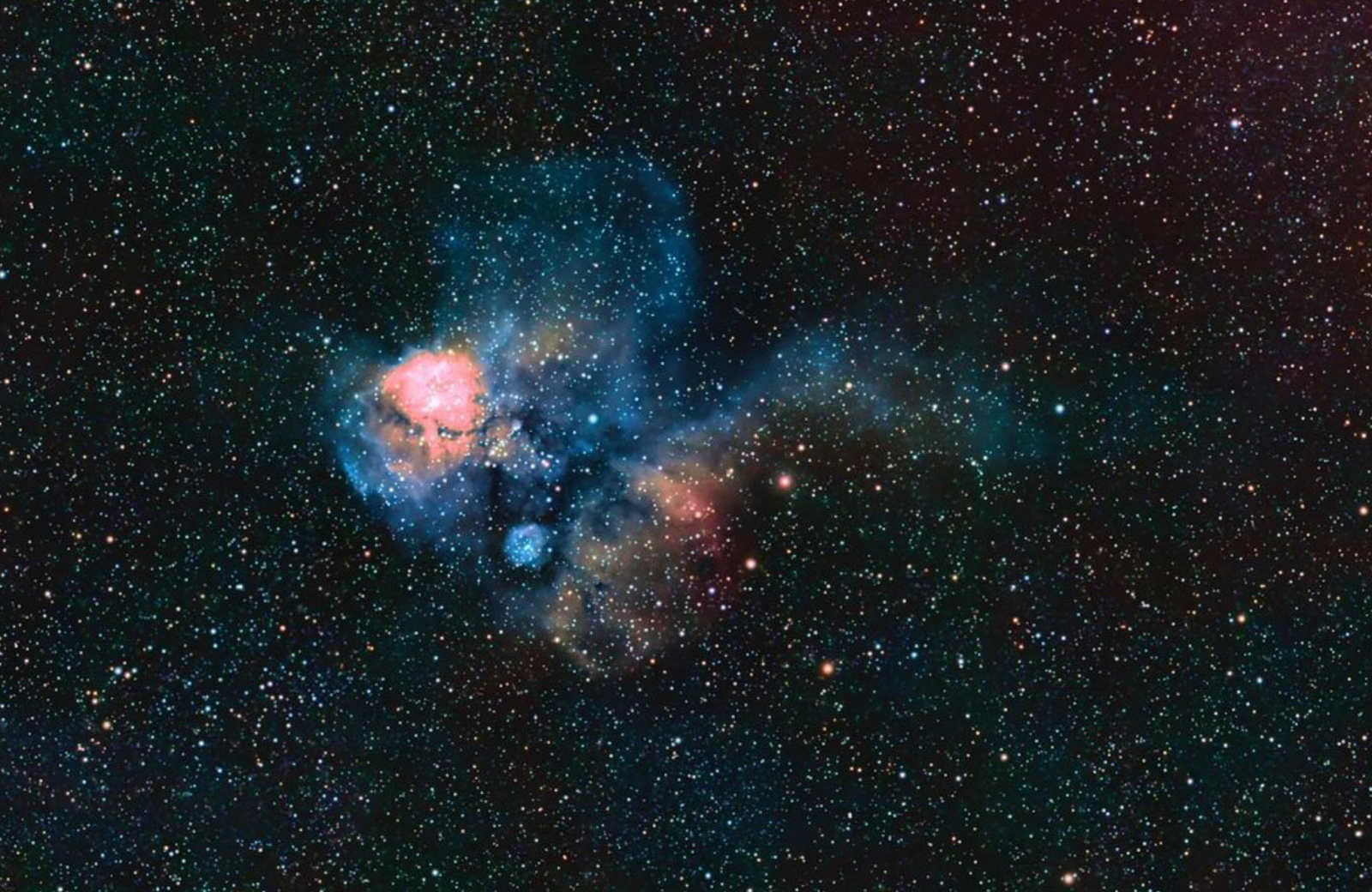
For the non-professional observer, what this means in practice is that stargazing in Gran Canaria offers an experience qualitatively different from anything available on the European mainland. The difference is not marginal. It is the difference between a sky that contains a few hundred visible stars and a sky that contains several thousand, between the Milky Way as a vague brightening in one region of the sky and the Milky Way as an actual structure — a river of light with visible texture, density variations, and dark lanes of dust that interrupt the starfield like geological features.
Why Gran Canaria’s skies are exceptional
Several factors converge to produce the island’s astronomical quality. The Atlantic trade winds, which blow consistently from the northeast, create a stable atmospheric layer that reduces the turbulence astronomers call “seeing” — the shimmering effect that blurs star images from land-based telescopes. The island’s position, roughly 150 kilometres off the coast of West Africa, places it well beyond the light pollution cone of any major continental city. And Gran Canaria’s own interior — sparsely populated, roadlit minimally, and protected in large portions as a UNESCO Biosphere Reserve — provides dark sky zones within forty minutes of a city of 400,000 people.
The Caldera de Bandama, a volcanic caldera roughly one kilometre in diameter and 200 metres deep, sits at around 570 metres altitude immediately inland from Las Palmas. The topography of the caldera rim shields observers from the city’s light dome to the north, and the clear southern and eastern horizons open onto the Atlantic. At this altitude, the atmosphere is measurably thinner and drier than at sea level, which directly improves the transparency and contrast of the sky.
Further into the interior, above 1,500 metres around Roque Nublo and the central massif, the conditions improve further still. The characteristic temperature inversion that affects the Canary Islands — the same meteorological boundary that creates Tenerife’s famous sea of clouds — keeps the upper atmosphere dry and cloud-free on most nights, even when the coastal areas are affected by marine moisture.
What a guided stargazing session offers
The difference between spending an evening looking at the sky independently and doing so with expert guidance is not small. A well-structured tour in Gran Canaria’s dark zones typically begins with dark adaptation — the twenty to thirty minutes during which the eye’s rods adjust to low light conditions and sensitivity increases by a factor of roughly 10,000. Most people have never experienced properly dark-adapted vision. It changes what the naked eye can see more than any piece of equipment.
From there, a quality guide takes you through the sky in a way that transforms individual points of light into a navigable geography: the winter hexagon of bright stars that organises the northern winter sky, the dense heart of Scorpius pointing toward the galactic centre in summer, the Andromeda Galaxy — 2.5 million light-years away, the most distant object visible to the naked eye — a smudge above the constellation Perseus that becomes, through a telescope, an oval glow with a brighter nucleus.
Through a calibrated telescope at these altitudes, the planets reveal details that photographs don’t fully prepare you for. Saturn’s rings, seen in person, produce a specific silence in people who have only seen them in images. Jupiter’s cloud bands and the four Galilean moons, arranged each night differently like a slowly changing puzzle, are visible even in modest apertures. The Moon, when present, is almost overwhelming — a world of craters, mountain ranges, and ancient lava plains spread across the eyepiece in detail that makes its scale tangible.
Atlantic Star Adventures runs premium night sky experiences from Gran Canaria’s dark sky zones, combining access to optimised observation sites, research-quality telescopes, and bilingual expert commentary that makes the experience accessible whether you’re an astronomy enthusiast or someone who has never thought about what’s above the clouds before. Groups are deliberately small — large groups and astronomy are fundamentally incompatible — and the sessions are structured around genuine engagement rather than a fixed script.
Planning note: The island’s clearest and darkest skies coincide with the new moon period each month and are most reliable between October and April when the trade winds are most stable. Booking ahead is essential — demand consistently exceeds availability on good-weather weekends, and the experience is weather-dependent in ways that make flexibility useful.
2. Walk Along Las Canteras Beach at Night
Three kilometres of Atlantic seafront, and the city at its most relaxed.
Las Canteras is, by objective measurement, one of the finest urban beaches in Europe — a 3.2-kilometre arc of fine gold sand, sheltered by a natural reef called La Barra that creates a lagoon effect in the central section, moderating the Atlantic swell and producing water that is calm enough for swimming year-round. But the beach’s best quality is not visible by day.
After dark, the paseo marítimo that runs its length transforms into the social spine of the city. The restaurants that front the promenade lower their terraces and light them with the slightly theatrical warmth of spaces designed for unhurried evenings. The fish restaurants — and Las Canteras has some of the best in the city, operating at price points that bear no relation to the quality of what arrives at the table — fill with a mix of residents and travellers who both know what they’re doing. Ordering the catch of the day, grilled simply and served with the island’s papas arrugadas and two varieties of mojo, is not an instruction you need to overthink.
The beach itself, after the families with children have gone and before the later evening crowd arrives, passes through a window of particular calm. The water at night reflects the ambient light of the promenade in long streaks across the lagoon. The reef breaks are audible but distant, a background rhythm that sets the pace of everything. If you’ve been in the city for a few days, this is the evening walk that makes Las Palmas make sense — not a resort, not a party destination, but a city that happens to have the Atlantic Ocean at the end of its main street.
3. Enjoy a Sunset Sailing Experience
Las Palmas from the water, as the light changes everything.
Puerto de La Luz is one of the great Atlantic ports — a working harbour that has been provisioning ships crossing to the Americas since the sixteenth century, when Christopher Columbus stopped here to repair the rudder of the Pinta before continuing west. The port’s scale is still impressive: container ships, cruise liners, fishing trawlers, and leisure sailing fleets share a harbour complex that spreads along the northeastern coast of the city.
Departing from this harbour on a sailing vessel as the afternoon shifts toward evening is one of those experiences that reframes a destination entirely. From the water, Las Palmas reveals aspects of its geography that are invisible from land: the volcanic drama of the Isleta peninsula, connected to the main island by a narrow isthmus; the sweep of Las Canteras seen from its ocean-facing side; the gradual darkening of the Canarian interior as the light moves off the mountains.
The Atlantic Ocean around Gran Canaria is biologically productive in a way that surprises visitors — the cold Canary Current, flowing south from the Iberian upwelling, brings nutrients that support a food chain visible at the surface. Common and bottlenose dolphins are regular escorts for sailing vessels in the waters west and south of the island, particularly in the late afternoon when they are most active. Loggerhead turtles are sighted with sufficient regularity to be a reasonable expectation rather than a stroke of luck.
As the sun drops below the horizon and the first stars become visible above the ocean to the east, the experience completes itself in a way that requires no narration. The city lights begin to appear along the shore. The lighthouse at the Isleta blinks its pattern. The evening arrival back into the harbour, with the warmth of Las Palmas spread along the waterfront ahead of you, is a good ending to a day.
4. Discover Vegueta After Dark
Where Las Palmas keeps its history, and its best evening pace.
Vegueta is the oldest part of Las Palmas — the colonial quarter founded in 1478, from which the Spanish crown administered the Canary Islands and, for a period, much of the Atlantic trade route. The architecture is the Spanish colonial style of that era: thick-walled stone buildings, carved wooden balconies overhanging narrow cobbled streets, courtyards that are both private and visible through heavy iron gates.
During the day, Vegueta is a heritage district — the Casa de Colón (Columbus House), where the explorer is said to have stayed during his Atlantic preparations, functions as a museum; the Gothic Santa Ana Cathedral anchors the main plaza; and the Canarian Museum presents the archaeology of the pre-Hispanic Guanche civilisation. After dark, the academic and tourist functions recede and the neighbourhood reveals its actual evening character.
The restaurants of Vegueta operate late and well. The streets around the Mercado de Vegueta — the covered market that, by day, is one of the city’s best places to buy food — become a cluster of wine bars and tapas restaurants that attract a distinctly local clientele. The cobblestones, lit by streetlamps positioned to illuminate the architecture rather than flatten it, produce a quality of light that is genuinely photogenic without being contrived.
The Plaza de Santa Ana, in front of the cathedral, is the neighbourhood’s evening centre of gravity. Bronze dogs — the heraldic symbol of the Canary Islands, a reminder that the islands’ name derives from the Latin for dog rather than from birds — sit at the plaza’s corners. The cathedral’s façade glows. Café tables spread across the square in the way that Spanish plazas have always encouraged. There is no particular agenda available here other than the one you bring.
5. Taste Traditional Canarian Cuisine
The island’s food culture, understood on its own terms.
Canarian cuisine is one of the least-known regional food traditions in Spain, and Gran Canaria is arguably its finest expression. The island’s position as a crossroads between Europe, Africa, and the Americas has produced a culinary identity that is genuinely its own — not a simplified version of mainland Spanish cooking, but a distinct tradition shaped by the Guanche people who inhabited the islands before the conquest, by the trade routes that brought ingredients from four continents, and by the practical intelligence of an island that learned to make exceptional use of what the Atlantic provided.
The foundational vocabulary is worth learning before you sit down. Papas arrugadas — small potatoes boiled in heavily salted water until the skins wrinkle and crystallise — are served at virtually every table and achieve, with the right mojo, something greater than their simplicity suggests. Mojo rojo, built from dried peppers, garlic, cumin, and vinegar, is warm, complex, and deeply savoury; mojo verde, made with coriander and green pepper, is its cooler, more fragrant counterpart. Together they function less as condiments than as essential seasoning for everything they touch.
The seafood tradition runs deeper still. Gran Canaria’s waters produce vieja (parrotfish), cherne (wreckfish), sama (red porgy), and burro (white bream) — fish species that appear on local menus and nowhere else, because they don’t travel well and because the export market has never made them economically interesting to anyone outside the islands. They are, without exception, excellent. The restaurants around Las Canteras and in the fishing villages of the island’s western coast serve them simply: grilled on charcoal, dressed with a little oil, accompanied by whatever papas arrugadas the kitchen has boiled that evening.
The island’s cheese tradition — particularly the smoked goat cheeses from the interior villages of Guía and Gáldar — and the wines of the Denominación de Origen Monte Lentiscal are worth exploring deliberately. The whites in particular, made from local grape varieties on volcanic soils, have an acidity and mineral character that pairs precisely with the seafood tradition they’ve grown up alongside.
6. Watch the Sunset from La Isleta
The volcanic peninsula that gives Las Palmas its silhouette.
La Isleta is the volcanic peninsula that forms the northern tip of Gran Canaria — geologically younger than the rest of the island, still sharp-edged rather than eroded into the rounded forms of the interior. It is a working-class neighbourhood of fishing families and port workers, largely bypassed by tourist infrastructure and entirely genuine as a result.
The elevated points of La Isleta provide what are arguably the finest sunset views in Las Palmas. The Pico de la Isleta and the hills above the neighbourhood offer western views over the Atlantic unobstructed by anything taller than a navigation aid, and eastern views back across the city toward the mountains of the interior. In the late afternoon, when the low sun illuminates the coloured facades of La Isleta’s buildings from an angle that would please a cinematographer, the neighbourhood takes on a quality that rewards the twenty-minute walk from Las Canteras.
The lighthouse at the peninsula’s tip — one of several along the Gran Canaria coast — operates from dusk and adds its own rhythm to the transition from evening to night. From this point, on clear evenings, the island of Tenerife is visible on the western horizon, with the unmistakable silhouette of Mount Teide above the clouds. Fuerteventura appears to the northeast. The orientation of the Canary Islands in the Atlantic becomes, briefly, legible.
7. Listen to Live Music in Santa Catalina
The neighbourhood where Las Palmas’s evening is at its most democratic.
Santa Catalina is the district that sits between the tourist zone of Las Canteras and the working port of Puerto de La Luz — a neighbourhood of wide boulevards, market stalls, and terrace bars that operates with the casual energy of a place where nobody is performing for an audience. The Parque Santa Catalina, the neighbourhood’s central square, is one of the great informal public spaces of the Canary Islands: chess players, taxi drivers, market vendors, and travellers of every background sharing a space with the easy familiarity of people who have all been coming here for years.
In the evenings, the bars around the park and along the streets of the neighbourhood put out speakers, open their terrace shutters, and let the music carry. This is not a curated cultural programme — it’s the organic musical culture of a Spanish-Atlantic city, which means it can run from local singer-songwriters to cumbia to jazz to the occasional traditional Canarian timple (a small five-stringed instrument related to the ukulele) depending entirely on who has decided to play that night.
For travellers looking for gran canaria nightlife that doesn’t centre on clubs and crowds, Santa Catalina is the reliable answer. The bars here close when the last customers leave rather than on a schedule, and the conversations that happen at terrace tables under the palm trees of the Parque have a particular quality — unhurried, mixing languages, occasionally very funny — that tends to keep people out later than they planned.
8. Explore the Port and Marina at Night
Puerto de La Luz at rest, and what the harbour reveals after dark.
The commercial port of Las Palmas is one of the busiest in the Atlantic, but the marina and leisure harbour areas adjacent to it operate at a different pace. The marina at Puerto de la Luz — home to sailing vessels from across the Atlantic crossing routes, the ARC (Atlantic Rally for Cruisers) fleet, and a year-round population of liveaboard sailors — is at its most accessible and atmospheric after dark.
The night logic of a working marina is particular. The boats creak quietly at their moorings. Anchor lights — the white lights all vessels display when moored, one at each masthead — produce a field of reflected light on the water that has no equivalent on land. The conversations that drift from cockpits are in multiple languages. The smell is salt and marine fuel and the specific combination of fibreglass and rope that belongs entirely to this environment.
The restaurants and bars that front the marina cater to the sailing community and to the residents of the port neighbourhood who have no particular interest in the tourist trade. The fish here is often the catch brought in that morning by the working trawlers on the far side of the port — not on any restaurant review list, not translated on the menu, and consistently worth ordering. A cold Tropical (the local Canarian beer) on a marina terrace on a warm evening is a simple pleasure that requires no embellishment.
The walk from the marina northward along the harbour wall, past the working port infrastructure toward the lighthouse, is one that most visitors to Las Palmas don’t take and most regulars consider routine. The scale of the working port — visible from the harbour wall as a landscape of cranes, container ships, and navigation lights stretching toward the horizon — gives the city a dimension that the beach and old town don’t convey.
9. Try Night Photography in Las Palmas
The city and the sky, and how to capture both.
Las Palmas offers night photographers two distinct ranges of subject matter: the city itself, with its combination of colonial architecture, modern waterfront infrastructure, and the reflective surface of the Atlantic; and the sky above the island’s interior, where the Milky Way rises over volcanic terrain in conditions that make serious astrophotography accessible to any photographer with a tripod and a basic understanding of their camera.
For urban night photography in Las Palmas:
The Auditorio Alfredo Kraus — the concert hall designed by Óscar Tusquets Blanca that sits directly on the Las Canteras beachfront, its white angular form cantilevered over the water — is the city’s most photogenic building after dark. Photographed from the beach at long exposure, with the concert hall reflected in the wet sand at low tide and the lights of the Isleta visible across the bay, it produces images that are almost unfairly good. Arrive at blue hour (twenty minutes after sunset) when residual sky colour and artificial light are in balance.
The narrow streets of Vegueta, photographed with a wide-angle lens at modest ISO, produce images of considerable atmosphere — the carved balconies, the warm pool of streetlight on cobblestones, the occasional figure in the middle distance. Puerto de La Luz and the marina at long exposure, with boat lights and crane gantries trailing across the frame, reward experimentation with exposure lengths between 15 and 60 seconds.
For astrophotography and Milky Way photography:
- Location is everything. Drive twenty minutes into the interior, above Telde or toward Bandama, and the city’s light dome drops below the southern horizon ridge. The Caldera de Bandama rim provides excellent elevation, a dark southern horizon, and the visual interest of volcanic landscape as foreground.
- Open your aperture as wide as it goes. f/1.8 or f/2.8 gathers the light you need. f/4 is significantly less effective.
- Apply the 500 rule. Divide 500 by your focal length (or 333 for APS-C sensors) to find your maximum shutter speed before stars trail. At 20mm full-frame: 25 seconds maximum.
- Shoot at ISO 3200–6400 in RAW format. Post-processing RAW files for Milky Way detail requires the tonal range that JPEG compression destroys.
- Include volcanic foreground. Gran Canaria’s basalt rock formations, silhouetted against a Milky Way rising over the Atlantic, provide a visual context that places the sky in a specific geography. This is what separates a generic star photo from an image that communicates place.
- Dark-adapt before shooting. Spend thirty minutes in complete darkness before evaluating your compositions. What your camera can see and what your dark-adapted eye can see are two different things, and calibrating between them produces better framing decisions.
10. End Your Day with a Guided Stargazing Experience
The evening that puts everything else in perspective.
There’s a version of Las Palmas that most visitors experience — the beach, the old town, the seafood, the easy pleasures of a city that understands how to make the most of its climate and its position. It is, on its own terms, excellent.
And then there is the version available to those who drive twenty minutes into the interior on a clear night and let their eyes adjust to what the Canary Islands have always offered: a sky of a quality that Western Europe, on its own, can no longer produce.
The things to do in Las Palmas de Gran Canaria at night extend, in other words, well beyond the city itself. Gran Canaria’s volcanic interior contains some of the darkest accessible sky in the Canary Islands. The same trade winds that make the coast so pleasant moderate the atmosphere above the island, producing viewing conditions of unusual stability. The same light protection laws that have made the Canary Islands a global astronomical reference protect those conditions from the light creep that is slowly eliminating dark sky from the rest of Europe.
Standing in that darkness, with a knowledgeable guide using a laser pointer to trace the constellations across a sky that contains thousands of individually visible stars, and then pressing your eye to the eyepiece of a telescope to see the rings of Saturn for the first time in person — that is not a supplementary experience. It is, for most people, the evening that earns the most space in the conversation when they get home.
Atlantic Star Adventures offers guided stargazing experiences from Gran Canaria‘s best dark sky zones, combining transport from Las Palmas, expert bilingual guides, and professional telescopes with the interpretive context that makes astronomical observation genuinely meaningful rather than merely impressive. The approach is unhurried — dark sky astronomy rewards patience — and the sessions are structured to accommodate both complete beginners and those who already know their way around the night sky.
Book ahead. The best nights in Gran Canaria are finite, and the waiting list for clear skies has no registration form.
Frequently asked questions on what to do in Gran Canaria at night
What is there to do in Las Palmas at night?
Las Palmas de Gran Canaria offers a range of evening experiences that go well beyond conventional nightlife. The most distinctive include stargazing in the dark sky zones of Gran Canaria’s volcanic interior, sunset sailing from Puerto de La Luz with possible dolphin sightings, dining on fresh Canarian seafood along the Las Canteras promenade, exploring the colonial streets of Vegueta, attending live music in the Santa Catalina neighbourhood, and walking the marina of Puerto de La Luz. The city’s warm evening climate and relaxed social rhythm make outdoor evening activities genuinely comfortable year-round.
Is Las Palmas safe at night?
Las Palmas de Gran Canaria is generally considered safe for travellers at night. The main tourist areas — Las Canteras, Vegueta, Santa Catalina, and the marina — are well-lit, well-populated, and welcoming throughout the evening. As with any city of 400,000 people, standard urban precautions apply: be aware of your surroundings in less-frequented areas, keep valuables secure, and avoid isolated streets late at night. The beach areas and promenade are consistently safe and busy until well after midnight during the warmer months.
Does Las Palmas have good nightlife?
Yes, though Las Palmas nightlife has a character that suits some travellers better than others. The city’s bar and club culture is concentrated around the Triana neighbourhood and the streets adjacent to Santa Catalina park, running late on weekends in the Spanish manner. But the more interesting evening culture of Las Palmas operates at a quieter register: terrace dinners that begin at 9pm and extend past midnight, live music in neighbourhood bars, and the particular pleasantness of a city that treats the evening as its best feature. It is not a party island — but it is a city that genuinely knows what to do with the hours between sunset and midnight.
Can you see the Milky Way in Gran Canaria?
Yes. Outside the light pollution cone of Las Palmas city, Gran Canaria’s skies are dark enough to show the Milky Way clearly to the naked eye on moonless nights. The island’s interior — particularly around Bandama, the Roque Nublo area, and the central massif above 1,000 metres — provides accessible dark sky zones within thirty to forty minutes of the city. The Canary Islands are protected by some of the strictest light pollution legislation in the world, and the atmospheric conditions produced by the Atlantic trade winds give Gran Canaria sky quality that is exceptional for its proximity to a major city. The galactic core is most prominent and well-positioned between May and September, when it rises high above the southern horizon.
Where is the best place to see stars in Gran Canaria?
The best stargazing locations in Gran Canaria are in the island’s volcanic interior, away from the coastal light pollution. The Caldera de Bandama, a well-preserved volcanic crater at around 570 metres altitude just twenty minutes from Las Palmas, is one of the most accessible and consistently dark sites near the city. Higher up, the central massif around Roque Nublo and the Pajonales forest provide darker conditions still, with clearer southern horizons open to the Atlantic. Guided stargazing tours arrange access to optimised observation sites and handle the logistics of getting there after dark, which makes them the most practical option for visitors without local knowledge.
What is the best evening activity in Las Palmas?
For most visitors, the experience that proves most memorable is a guided stargazing session in Gran Canaria’s dark interior — particularly for those who have never seen a genuinely dark sky. The combination of the island’s atmospheric quality, the depth of the night sky at these Atlantic latitudes, and the interpretive value of expert guidance produces something that most people don’t plan for and consistently describe as the highlight of their trip. Beyond stargazing, a sunset sailing trip from Puerto de La Luz — timed to arrive back in harbour as the first stars appear — is the evening activity that most completely captures what makes Gran Canaria’s position in the Atlantic exceptional.