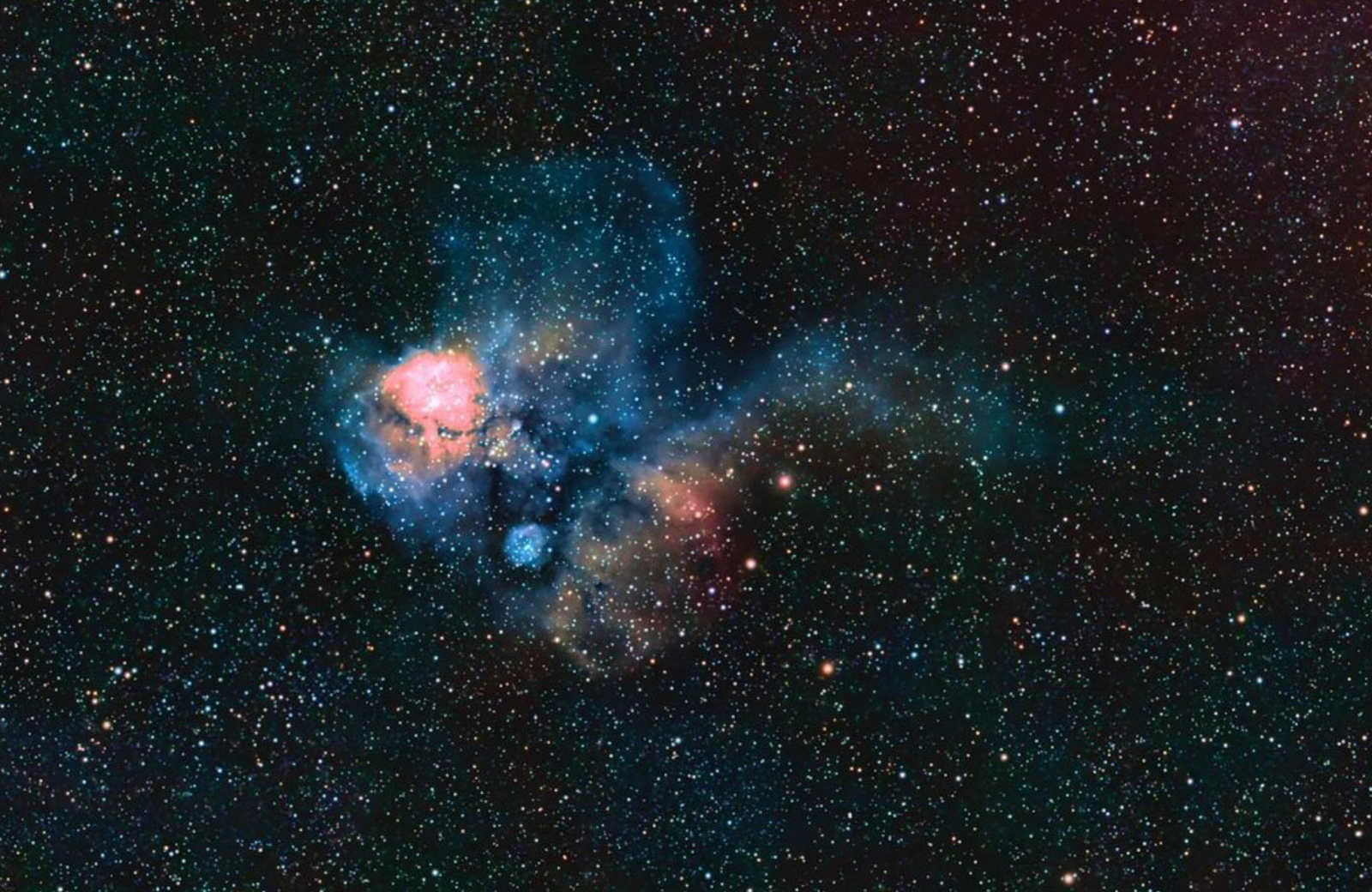
Looking for the best things to do in Tenerife at night? From stargazing in Teide National Park to seaside walks and local dining, these unforgettable experiences show why the island is just as magical after sunset.
Why Tenerife Is Even Better After Sunset
Most people arrive in Tenerife for the sun. They leave thinking about the stars.
There’s a version of this island that exists only after dark: quieter, stranger, and in many ways more beautiful than anything the daylight hours reveal. The temperature softens but stays warm, even in winter. The volcanic landscape, stripped of its daytime crowds, becomes something more elemental.
And above it all, on clear nights that come with startling regularity, the sky opens up in a way that simply isn’t possible in most of Europe.
Tenerife holds official UNESCO Starlight Destination status, a designation shared by fewer than forty places on Earth, awarded by the Starlight Foundation in recognition of exceptional sky quality and the legal framework that protects it. The 1988 Canary Islands Sky Law is among the strictest dark-sky legislation anywhere in the world. Canary Islands observatories, including the Teide Observatory, operated by the Instituto de Astrofísica de Canarias at 2,400 metres, are not here by accident.
But this is not only a story about astronomy. Tenerife at night is also cobblestoned colonial towns glowing under old streetlamps, Atlantic fish arriving in kitchens that afternoon, coastal promenades humming with local life, and clifftops where the setting sun turns the sea from silver to bronze to black.
Several factors converge after sunset to make the island genuinely exceptional. The trade winds that cool Tenerife by day stabilise after dark, reducing atmospheric turbulence. Evening temperatures in the south hover around 18–22°C year-round. Above 2,000 metres, the thermal inversion layer — a permanent meteorological ceiling of cloud — keeps the upper elevations remarkably clear even when the coast below is overcast. And once you move beyond the main resort centres, the sky darkens fast.
The best experiences on this island don’t end at sunset. In many cases, they begin there.
1. Stargaze from the Sea: Astronomy Sailing from Marina del Sur
The experience that puts most land-based stargazing into perspective.
Most stargazing in Tenerife happens from altitude — from the caldera of Teide National Park, where the volcano’s mass and the 2,000-metre elevation combine to produce some of the clearest skies in Europe. That experience is excellent, and we’ll cover it in the next section.
But there’s another way to reach dark sky in Tenerife that nobody else offers: from the water.
We board our 7.5-metre RIB from Marina del Sur just before sunset. As the coastline fades behind us, the ambient light of the resort strip drops to a thin line on the horizon, then disappears. Out here, there’s no light pollution below and no atmospheric obstruction above — just the Atlantic horizon in every direction and, once night falls, the full architecture of the sky.
The experience runs approximately three hours: around one hour of navigation and two hours of observation anchored in open water. We carry binoculars, a planisphere, and a green laser pointer for constellation tours. Our hydrophone — a waterproof microphone lowered over the side — lets you hear the ocean in an entirely different register: the clicks and pulses of cetaceans, the creak of deep current. It’s one of those details that sounds gimmicky in a description and turns out to be unforgettable.
What you can see on a clear night from the water changes with the season:
- Winter (Nov–Feb): Orion rising to zenith, the Pleiades, Sirius — brightest star in the sky
- Spring/Summer (Apr–Aug): The Milky Way at full stretch, Scorpius clear above the southern horizon, the Summer Triangle
- Year-round: Saturn’s rings, Jupiter’s moons, Andromeda Galaxy to the naked eye on moonless nights
The group never exceeds ten people. That’s deliberate. Astronomy from a boat works in near-silence — large groups and shared darkness don’t mix well.
What to expect and practical information:
| Detail | Information |
|---|---|
| Departure point | Marina del Sur, Tenerife |
| Duration | ~3 hours (1h navigation + 2h observation) |
| Group size | Max. 10 guests (private boat available) |
| Price | From €600 for the full boat |
| Includes | Binoculars, planisphere, green laser, hydrophone, expert astronomer + skipper |
| Best months | April–October for the Milky Way; year-round for planets and constellations |
| What to wear | Warm layer essential — sea temperature drops after sunset even in summer |
One thing that consistently surprises guests: the reflected sky. On calm nights, the water mirrors the stars, and you’re effectively surrounded by them — above and below. No landscape observation point produces that.
👉 Book the Sailing Stargazing Experience in Tenerife
2. Watch the Sunset Above the Clouds from Mount Teide
The moment the island puts everything else on hold.
There’s a specific moment, roughly forty minutes before the sun disappears behind the Atlantic horizon, when the light turns horizontal and the cloud layer below the summit becomes a luminous sea of gold and copper. The island’s coastline is invisible. Where the Atlantic shows through gaps in the cloud, it’s the colour of hammered bronze. Fuerteventura and Gran Canaria appear on the horizon as dark shapes — the way continents look from very far out at sea.
This is the view from the Teleférico del Teide cable car station, at 3,555 metres, and it tends to produce silence even in crowds of strangers.
The cable car ascends in roughly eight minutes. To reach the actual summit requires a separate permit booked well in advance through the Teide National Park administration — the Spanish government strictly limits access to protect the volcanic ecosystem. For most visitors, the cable car station is entirely sufficient.
A practical note: the descent in fading light, with the first stars appearing overhead, is a transition between two spectacles rather than an ending. Those who pair an afternoon Teide sunset with a sailing stargazing session from Marina del Sur later that evening get both in a single day — and that combination works well as an itinerary.
3. Explore Teide National Park at Night
Where the landscape earns the sky.
The caldera floor of Teide National Park is a UNESCO World Heritage Site — obsidian, pumice, and ancient lava formations called roques, shaped by eruptions across millions of years. By day it’s dramatic. At night, stripped of its daytime crowds and lit only by what comes from above, it becomes something closer to alien.
At 3,715 metres, Mount Teide is the highest point in Spain and the third-tallest volcanic structure on Earth when measured from the ocean floor. Its summit sits above the majority of water vapour in the atmosphere — the invisible enemy of astronomical observation — and above the persistent marine cloud layer that blankets the Canary Islands below 1,500 metres.
On moonless nights, the Milky Way rises as a dense river of light above the silhouette of the caldera rim. The galactic core — the Sagittarius-Scorpius region where the galaxy is thickest — is visible in extraordinary detail. Stars that are theoretical in London or Madrid become objects you can point at.
Land-based guided tours in the park typically include:
- Dark adaptation time (20–30 minutes; guides don’t rush this — it transforms what you can see)
- Telescopic observation: Saturn’s rings, Jupiter’s cloud bands, the Andromeda Galaxy
- Constellation tours with a green laser pointer
- Astrophotography instruction
A note on dark adaptation: Your eyes need roughly 20–30 minutes in genuine darkness before they reach their full sensitivity. Avoid your phone screen during this period. Most people have never experienced properly dark-adapted vision, and the difference is not subtle — it’s the difference between seeing a few thousand stars and seeing tens of thousands.
The Teide road through the caldera stays open through the night, and guided land-based tours operate from multiple providers in the area. Book well ahead between November and February, when clear nights and the absence of summer haze bring demand to its peak.
4. Capture the Night Sky: Astrophotography Guide
You don’t need expensive gear. You need the right settings.
The skies above Teide National Park are among the most photographed in astrophotography, and for good reason: the combination of altitude, darkness, atmospheric stability, and the volcanic landscape creates images that look implausible until you’ve seen them made in real time. Modest equipment produces results here that would be impossible anywhere in mainland Europe.
Essential camera settings:
- Lens: Wide-angle, ideally 14–24mm, maximum aperture f/2.8 or wider
- Aperture: Open fully — f/1.8 or f/2.8 gathers far more light than f/4
- ISO: 1600–6400 depending on your camera’s noise performance (modern full-frame sensors handle ISO 3200 cleanly)
- Shutter speed: Use the 500 rule — divide 500 by your focal length to get the maximum exposure time before stars trail. At 24mm on full-frame: 500 ÷ 24 ≈ 20 seconds
- Format: Shoot RAW. JPEG compression destroys the tonal information you need to recover Milky Way detail in post
- Focus: Manual only. Use live view magnified to 10× on a bright star and adjust until it appears as a clean point — autofocus fails in darkness
- Shutter release: Use a remote release or 2-second timer to eliminate vibration
The roques — ancient volcanic rock formations rising from the caldera floor — make natural foreground subjects that add scale to Milky Way compositions. The best results come in the hours around midnight on moonless nights, between April and October.
If you’re a beginner, note that our sailing experiences from Marina del Sur include hands-on astrophotography guidance from the boat, a different and often simpler starting point than Teide, since the horizon is unobstructed in every direction.
5. Wander Around La Laguna After Dark
Where Tenerife’s intellectual history lives after 8pm.
San Cristóbal de La Laguna, the island’s former capital, is a UNESCO World Heritage Site of a more terrestrial kind — a sixteenth-century colonial city whose grid plan became the template for most of Latin America’s major urban centres. During the day it’s studied by architectural historians. After 8pm, it belongs to students.
La Laguna is home to the University of La Laguna, and the effect on the city’s evening character is immediate. The main pedestrian street, Calle Obispo Rey Redondo, fills with people in no particular hurry. Squares around the cathedral become outdoor living rooms. Tapas bars spill tables onto cobblestones that were laid when Shakespeare was young.
The architecture rewards slow walking. The carved wooden balconies of the old merchant houses are lit from below at night, turning dark timber into something almost theatrical. The cathedral’s façade glows. Churches occasionally open for evening concerts — La Laguna has a quiet but serious classical music culture.
For travellers staying in the south, it requires commitment: roughly forty minutes by road or an hour on the tram from Costa Adeje. It offers something the resort towns can’t — a Tenerife absorbed in being itself, with no particular interest in whether you’ve arrived.
6. Dinner with Ocean Views
The island’s best restaurants understand what the sea sounds like.
Fish landed at Los Abrigos, Playa San Juan, or Puerto de la Cruz arrive in kitchens within hours. Vieja (parrotfish), cherne(wreckfish), sama (red porgy) — species that rarely appear on menus outside the Canary Islands — are treated with the simple respect fresh seafood deserves: grilled, seasoned with sea salt, served with papas arrugadas and mojo sauces made the same way for generations.
Eating outdoors in Tenerife at night is genuinely comfortable year-round. Even in January, a light jacket is usually enough. The sound of the Atlantic in the background has a particular quality — not crashing waves but a slow, deep respiration, as if the ocean is breathing.
For specifically seafood-focused evenings, the working harbour at Los Abrigos in the south is the most concentrated option on the island: a cluster of fish restaurants where Tinerfeños treat the evening meal seriously. No tourist-menu pricing, no performance. Reservations recommended on weekends.
For clifftop views, the terraces above Costa Adeje and the promenade restaurants of Puerto de la Cruz offer settings that no amount of interior design can replicate.
A small note: the better Canarian restaurants carry bottles from the island’s volcanic vineyards — particularly from the Tacoronte-Acentejo appellation in the north — that are virtually unknown outside the archipelago and worth exploring deliberately.
7. Walk the Costa Adeje Promenade After Dark
The south coast finds its best self after the beach crowds leave.
Costa Adeje’s promenade changes character substantially after dark. The crowds thin. Light becomes warmer. Restaurants shift from the practical lunch economy to something more leisurely.
The stretch between Playa del Duque and Playa de Fañabé is worth the walk — low-rise development here keeps the sky relatively open, and the promenade is well-lit without being harsh. The sea, reflecting the moon and whatever stars clear the horizon above the resort lights, has a textured darkness that makes the walk feel different from the daytime version.
For something quieter, the old fishing village of La Caleta — a fifteen-minute walk from the main hotel zone — offers a handful of restaurants that have been serving the same fresh fish menus since before the tourism industry arrived. It’s a different register entirely.
Worth noting for planning purposes: the area is also roughly forty minutes from Teide National Park. The drive through the volcanic interior after dark — no traffic, no daytime coach convoys, the road cutting through ancient lava fields under a sky that keeps getting darker — is its own quietly dramatic experience.
8. Visit Los Gigantes at Sunset
Four hundred metres of vertical basalt, and then the light changes everything.
The cliffs of Los Gigantes rise from the Atlantic on Tenerife’s western coast to heights between 300 and 600 metres — vertical walls of dark basalt shaped by millions of years of erosion. From the water, they’re overwhelming. From the small town that takes their name, they form a backdrop that makes the ordinary business of a harbour feel cinematic.
At sunset, the effect intensifies. The western orientation of the cliffs means they catch the final light directly, turning from dark grey to deep ochre as the sun descends. The marina fills with people who’ve arrived specifically for this moment, and the restaurants along the waterfront — several with unobstructed cliff views — do their best business of the day.
A boat excursion timed to arrive in the bay as the sun sets is, if you can arrange it, one of the more memorable experiences of the island. The combination of looking up at the cliffs from sea level while the light fades, with the smell of the Atlantic and the sound of water against the hull, is the kind of thing that’s hard to describe accurately to people who weren’t there.
The short walk around the marina after dinner, when the cliffs have become dark silhouettes against a sky showing its first stars, needs nothing added.
9. Relax on a Quiet Beach Under the Stars
Sometimes, stillness is the experience.
Not every evening in Tenerife needs a destination. Some of the most memorable nights on the island are spent doing very little, in the right place.
Playa de la Tejita, in the far south near El Médano, is one of the best options. A long, windswept beach backed by the ochre cone of Montaña Roja, far enough from the main resort centres to keep the sky reasonably dark. On a clear night, the southern horizon — unobstructed by land for roughly 2,000 kilometres — shows stars not visible from northern Europe at all.
Playa de Benijo, on the wild northeastern coast near Taganana, requires more commitment — a narrow road through a dramatic mountain pass — but delivers a beach backed by cliffs and facing open Atlantic, with virtually no artificial light. In summer, local families arrive in the late afternoon and stay past midnight. That should tell you something about the island’s relationship with evening.
Practical requirements: a blanket, something warm for after midnight, and the patience to let your eyes dark-adapt (roughly 30 minutes for most people). The universe provides the rest.
Frequently asked questions
What is there to do in Tenerife at night?
Beyond the resort nightlife, Tenerife offers stargazing in Teide National Park (a UNESCO Starlight Destination), astronomy sailing from Marina del Sur, sunset boat trips to the Los Gigantes cliffs, fresh Atlantic seafood at working fishing harbours, and the UNESCO colonial streets of La Laguna. The island’s warm evening temperatures — 18–22°C in the south year-round — make outdoor activities genuinely comfortable after dark.
Is Tenerife worth visiting at night?
For many travellers, the island’s night experiences prove more memorable than the daytime ones. Tenerife holds UNESCO Starlight Destination status, meaning its night skies are officially protected and certified as exceptional. The combination of the volcanic landscape, the Atlantic seafood culture, and the transition from sunset over Teide to full astronomical darkness offers an evening dimension that most European beach destinations can’t match.
What makes stargazing at sea different from stargazing at Teide?
Land-based stargazing at Teide gives you altitude (2,000–3,555 m) and a remarkable volcanic landscape beneath a dark sky. Sailing stargazing from Marina del Sur gives you something different: a 360° unobstructed horizon at sea level, zero light pollution beyond 2 km offshore, a maximum group size of 10 guests, and the ocean itself as part of the experience — including the possibility of bioluminescence and cetacean sounds through the hydrophone. Neither is better in absolute terms; they’re different experiences for different kinds of evenings.
Can you see the Milky Way in Tenerife?
Yes, and Tenerife is one of very few places in Europe where the Milky Way is regularly visible to the naked eye. The galactic core is most prominent between February and October, peaking in visibility between May and August from dark-sky locations above 1,500 metres or from the water offshore. The combination of low light pollution, the stable atmospheric conditions created by the trade wind inversion layer, and the island’s position in the mid-Atlantic produces sky quality that rivals Chile and Hawaii for accessible observers.
Is Teide open at night?
Teide National Park has no formal closing time, the road through the caldera is accessible by car throughout the night. The Teleférico cable car operates only during daylight hours (typically 9am–5pm, varying seasonally). The summit area requires a separate permit booked in advance through the official park administration. Guided night tours arrange access to the best observation points within or adjacent to the park.
What should I wear for a night experience in Tenerife?
For beach-level activities in the south: a light jacket is usually sufficient. For the sailing experience from Marina del Sur: a warm mid-layer and windproof outer — the boat creates its own wind chill and the temperature drops after sunset. For Teide National Park at altitude: warm layers and a hat are essential year-round; temperatures at 2,000 metres can drop to 5–10°C even in summer. We send all guests a preparation checklist when booking.
What happens if it’s cloudy on the night of a stargazing experience?
Cloud cover is always a variable in any astronomical experience. Our sailing departures from Marina del Sur are assessed on the evening of the tour, and we contact guests directly if conditions make observation impractical. Cancellation and rebooking policy details are included on the experience page and in your booking confirmation.
Where is the darkest place in Tenerife?
The darkest accessible sky is in and around Teide National Park above 2,000 metres, particularly in the caldera. The remote northeastern coast — around Taganana and Playa de Benijo — offers very dark skies at sea level. And offshore: a few kilometres out from Marina del Sur, once the coastal light disappears behind the horizon, you’re in darkness that rivals the park. The island’s official dark-sky zones are delineated and protected under the 1988 Canary Islands Sky Law.
This guide is written by the team at Atlantic Star Adventures. We operate sailing and astronomy experiences in Tenerife, Gran Canaria, Madeira, the Azores, and Martinique, combining nautical expertise with astronomical guidance for groups of up to 10 guests. All our boats are duly registered and covered by Civil Liability Insurance and SOVI (Compulsory Travellers Insurance).