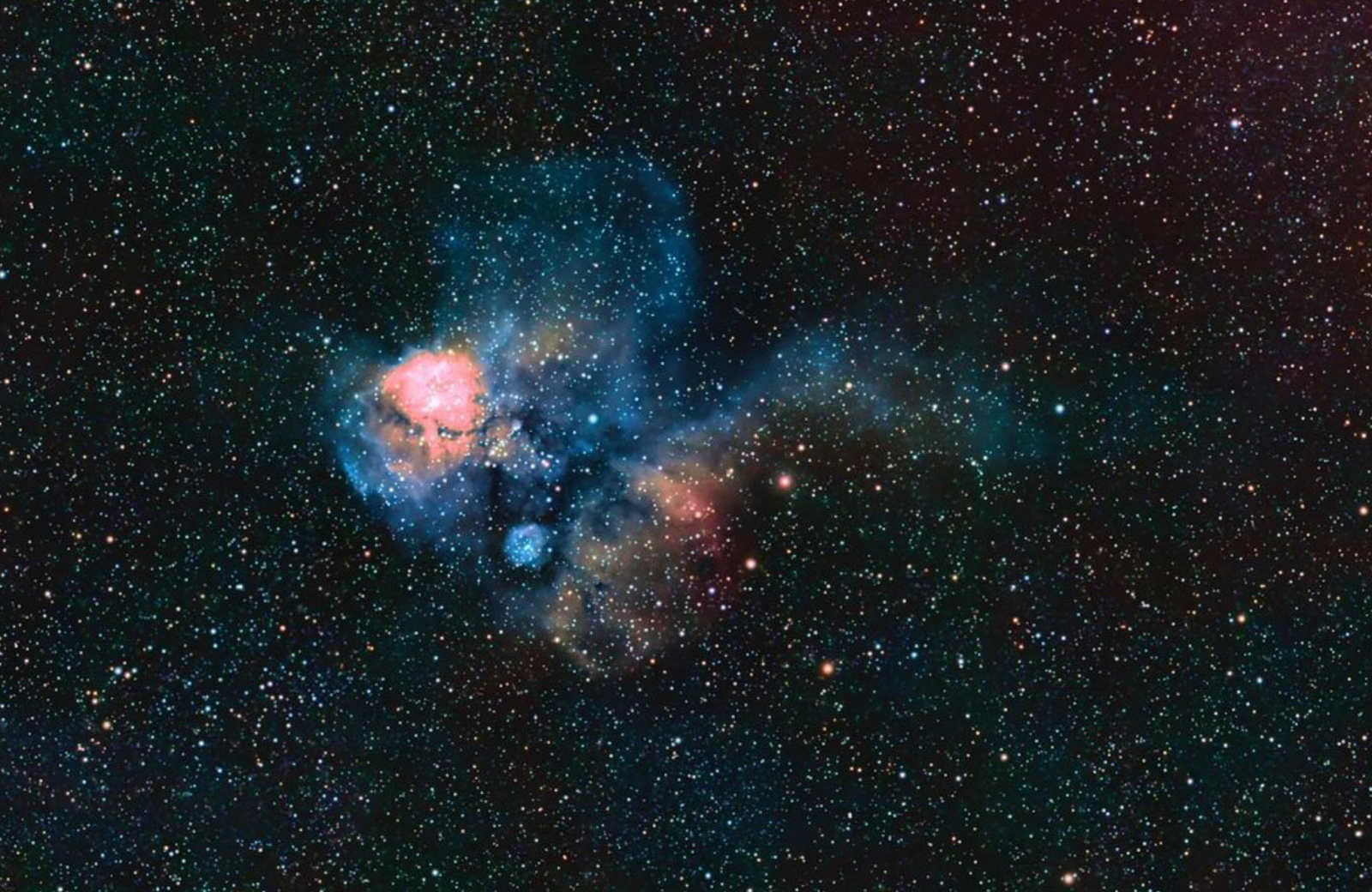
Something is shifting in the way people travel.
Not just where they go, but when. And why.
A growing number of travelers are planning trips around darkness. Not escaping the night, but seeking it. Choosing destinations specifically because the sky above them is unspoiled. Organizing their itinerary around a meteor shower, a lunar eclipse, the arc of the Milky Way over open water.
This is astrotourism. And it’s no longer a niche interest for dedicated amateur astronomers. In 2025, Booking.com listed it as one of the top travel trends of the year, with 60% of travelers reporting they had considered visiting a low-light-pollution destination specifically for stargazing. Demand for astronomy-focused travel has grown so quickly that one major tour operator reported tripling the capacity of its 2027 astronomical trips compared to 2024.
The question is: what’s driving it? And what does a genuine astrotourism experience actually look like?
What Is Astrotourism?
Astrotourism — also called astronomy tourism, dark sky tourism, or astro-travel — is travel motivated, in whole or in part, by the desire to observe and experience the night sky. It’s the practice of going somewhere specifically because the darkness there is extraordinary.
That might mean traveling to a remote desert to watch the Milky Way rise over the horizon. Sailing to open water to watch a meteor shower with no light pollution for 50 kilometers in every direction. Booking a guided stargazing experience on a volcanic island with one of Europe’s most protected night skies. Or chasing a total solar eclipse across continents, standing in the path of totality for the two minutes of darkness that enthusiasts describe as among the most powerful natural experiences a human can have.
Astrotourism is not one thing. It ranges from a casual evening experience — a guided constellation tour on a sailing boat — to a dedicated multi-week expedition built entirely around celestial events. What unites all of it is the sky as the destination, not the backdrop.
Why Astrotourism Is Growing So Fast
Several converging forces are driving the rise of astrotourism simultaneously. Understanding them helps explain why this isn’t a passing trend — it’s a structural shift in how a significant segment of travelers thinks about experience.
Light pollution is making darkness rare — and therefore valuable
According to Dark Sky International, a staggering 99% of the world’s population now lives under night skies polluted to some degree by artificial light. For most people in Europe, the United States, and Asia, a genuinely dark sky — one where the Milky Way is visible as a luminous river of light, where thousands of stars are visible to the naked eye, where satellites and meteor showers are a nightly occurrence — is simply not accessible from where they live.
That scarcity has made dark sky access a sought-after experience in its own right. The same psychological mechanism that makes wilderness valuable in an urbanized world is making darkness valuable in an illuminated one. Something that was once universal — the experience of looking up at an unpolluted night sky — has become rare enough that people will travel for it.
Celestial events are creating shared moments at scale
The 2017 solar eclipse saw more than 216 million people attempt to see it, making it one of the largest recorded audiences for any scientific, athletic, or entertainment event. Total solar eclipses, aurora borealis events, lunar eclipses, and major meteor showers are generating levels of public anticipation that rival major sporting events — and they’re driving travel decisions in exactly the same way.
Around one in four Gen Zers are interested in traveling for celestial events, and 35% of travelers say they would travel to view the Northern or Southern Lights. These are not fringe numbers. The 2024 total solar eclipse alone brought an estimated one to four million travelers into its path of totality.
The shift toward experience travel
The broader travel market has been moving for years away from destination tourism — visiting places — toward experience tourism — doing things. Astrotourism sits at the intersection of science, nature, adventure, and wonder in a way that few experiences can match.
Astrotourism has evolved from a niche pursuit to one of the most exciting travel experiences, connecting travelers with the universe via astrotours, bespoke accommodation, and unique celestial experiences. And critically, it combines exceptionally well with other experience categories: sailing, wellness, cultural immersion, wildlife encounters. An evening that begins with sunset at sea and ends under a sky full of stars is not just an astronomy experience — it’s a complete sensory and emotional event.
Sustainability alignment
Astrotourism is based on sustainability and eco-conscious choices that protect our natural landscapes. Because dark skies require the absence of light pollution, astrotourism destinations are almost always in places where conservation, minimal development, and environmental protection are already priorities. This makes astrotourism naturally aligned with the values of the growing segment of travelers who want their tourism choices to be ecologically responsible.
Galloway Forest Park, the first International Dark Sky Park in the UK, generated an estimated £500,000 a year from dark sky tourism in its first decade after certification. Astrotourism doesn’t just protect dark skies — it generates the economic incentive for communities to protect them.
What Astrotourism Actually Includes
One common misunderstanding is that astrotourism requires scientific knowledge or specialist equipment. It doesn’t. The experience ranges from entirely accessible for absolute beginners to deeply technical for dedicated observers, and the best astrotourism experiences are designed to meet people exactly where they are.
Stargazing experiences and guided constellation tours The most accessible entry point. A guide — ideally someone with formal astronomical training — takes you to a dark location or out to sea, and helps you read the sky. You learn to find the constellations, understand what you’re seeing, and connect the patterns overhead to the stories and science behind them. No equipment required beyond your own eyes.
Dark sky sailing Taking a stargazing experience onto the water removes the last obstacles between you and the sky. No buildings breaking the horizon. No street lights bleeding into the peripheral vision. No terrestrial light pollution at all. Open water under a dark sky is one of the purest astronomical environments accessible to a traveler without specialist expedition equipment — and the motion of the sea adds a dimension to the experience that land-based stargazing simply doesn’t have.
Eclipse chasing Traveling specifically to witness a total solar eclipse — positioning yourself within the narrow band of the Moon’s shadow as it crosses Earth’s surface. Tour operators are already planning experiences for the longest eclipse in our lifetime, taking place on 2 August 2027, with dedicated tours to Spain, Iceland, and other locations in the eclipse path already selling out months in advance. Those who have experienced totality consistently describe it as one of the most emotionally overwhelming natural events they’ve witnessed.
Aurora viewing Traveling to high-latitude destinations to witness the aurora borealis (northern lights) or aurora australis (southern lights) — the shimmering curtains of green, pink, and violet light produced when solar particles interact with Earth’s atmosphere. Aurora tourism has become one of the largest and most commercially developed segments of astrotourism, with destinations like Iceland, Norway, and northern Finland building significant tourism infrastructure around it.
Meteor shower observation Planning travel to dark sky locations to coincide with major annual meteor showers — the Perseids in August, the Leonids in November, the Geminids in December. From a dark, clear location, a peak Perseid night produces 100 or more visible meteors per hour. From a city, it produces none.
Astrophotography Traveling to dark sky destinations to photograph the night sky — capturing the Milky Way, star trails, planetary conjunctions, or celestial events. Astrophotography has grown significantly as camera technology has improved and social media has created an audience for night sky imagery. It adds a creative and technical dimension to astrotourism that appeals to a broad range of travelers.
The Best Astrotourism Destinations in the World
Dark sky quality is measured by the Bortle Scale; a nine-point scale from Class 1 (perfectly dark, the best possible sky) to Class 9 (inner-city sky, where only the Moon, planets, and the brightest stars are visible). The world’s premier astrotourism destinations sit at Class 1 or 2.
The Atacama Desert, Chile Home to some of the world’s largest observatories, the Atacama is at extreme altitude, with virtually no humidity and almost no light pollution. It consistently ranks as one of the top two or three astrotourism destinations globally. Antofagasta in Chile’s Atacama Desert has seen 327% year-on-year growth through dark sky tourism.
New Zealand’s Aoraki Mackenzie Dark Sky Reserve. One of the largest dark sky reserves in the world, and one of the few places on Earth where the full southern Milky Way — including the Galactic Center — rises nearly overhead. A growing destination for astrotourism from Europe and Asia.
Namibia’s NamibRand Nature Reserve, Africa’s only official International Dark Sky Reserve, internationally recognized for its pristine night skies — combined with some of the continent’s most spectacular wildlife. The combination of safari and stargazing is one of the most compelling astrotourism offerings in the world.
The Canary Islands: Europe’s premier dark sky destination. La Palma in the Canary Islands is home to some of Europe’s most important astronomical observatories, including the Roque de los Muchachos Observatory — chosen for its exceptional atmospheric transparency, altitude, and sky darkness. The Canary Islands have some of the most stringent sky protection legislation in Europe, actively limiting light pollution to preserve the astronomical conditions that have attracted international research institutions.
The islands’ subtropical latitude — around 28°N — also gives them a significant astronomical advantage over mainland Europe: they offer access to southern constellations that European observers rarely see, including Scorpius at its full height, and occasionally the upper rim of the Southern Cross.
Besides, you can check our stargazing experience in Tenerife here.
The Azores — mid-Atlantic isolation, extraordinary skies. Sitting in the open mid-Atlantic at 37–39°N, the Azores benefit from their remoteness: no nearby continental light pollution, clean ocean air, and on clear nights, transparency that produces some of the most vivid naked-eye Milky Way views accessible from a European-linked destination. The archipelago’s cloud cover is its variable — but when it clears, the sky rewards accordingly.
Check our stargazing experience in São Miguel here.
Madeira — trade wind clarity over the Atlantic. Cleared by Atlantic trade winds and surrounded entirely by sea, Madeira offers remarkable dark sky quality once you leave the capital Funchal. The island’s dramatic topography — cliffs falling directly into the ocean — means that a boat offshore provides an entirely unobstructed southern horizon.
You can check our stargazing experience in Madeira here.
Martinique — the deep southern sky of the Caribbean. At 14°N latitude, Martinique offers the southernmost perspective of the four Atlantic Star Adventures destinations. From here, Scorpius rises high and brilliant in the summer sky, the Southern Cross is clearly visible in southern spring, and the core of the Milky Way passes almost overhead in July and August — an experience entirely inaccessible from most of Europe.
Check our stargazing experience in Martinique here.
What Makes an Astrotourism Experience Genuinely Good
Not all stargazing experiences are equal. The difference between a mediocre astrotourism experience and an extraordinary one comes down to a few key factors.
Dark sky quality. The single most important variable. The darkest location you can reach defines the ceiling of what’s possible. No guide, telescope, or app substitutes for genuine sky darkness.
Expertise of the guide. A good astronomical guide transforms the experience from “looking at lights” to “understanding the universe.” The difference between recognizing that a bright object is a star and understanding that it’s a red supergiant 700 light-years away — and seeing its color for the first time — is the difference between a pleasant evening and a genuinely perspective-shifting one.
Absence of competing stimuli. The experience of a truly dark, quiet sky is partly about what isn’t there: no noise, no artificial light, no interruptions. The most powerful astrotourism experiences create the conditions for the sky to have the full attention it deserves.
The right conditions on the night. Moon phase matters enormously — a full moon washes out faint stars and the Milky Way completely. Atmospheric conditions, humidity, and cloud cover all affect sky quality. Good astrotourism operators understand this and build flexibility around it.
Astrotourism on the Water: Why the Sea Changes Everything
Of all the ways to experience the night sky, sailing under the stars offers something that land-based experiences — even in the darkest locations — cannot replicate.
When you’re at sea, the sky becomes total. The horizon extends in every direction, unbroken by any structure. The silence (on a sailing boat moving under wind power, with the engine off) creates an acoustic backdrop that heightens the visual experience. The gentle motion of the water, the temperature of the ocean air, the slow rotation of the stars as the boat moves — these things combine into an experience that is harder to describe than it is to feel.
It’s also worth noting that sailors have navigated by stars for millennia. Being at sea under a dark sky reconnects you to something ancient — the understanding that for most of human history, the night sky was a map, a calendar, a compass, and a source of stories. That connection feels viscerally different on the water than it does standing in a field.
Atlantic Star Adventures was built around exactly this: the combination of sailing and astronomy in some of the most naturally dark skies in the Atlantic — the Canary Islands, Madeira, the Azores, and Martinique — with certified marine star guides who know these skies and these waters intimately.
Frequently Asked Questions on Astrotourism
What exactly is astrotourism?
Astrotourism is travel motivated by the desire to observe and experience the night sky — stargazing, celestial event-chasing, dark sky experiences, and astronomy-guided tours. It ranges from accessible evening stargazing experiences to dedicated multi-week expeditions built around specific astronomical events.
Why is astrotourism growing so quickly?
Several forces converge: light pollution has made dark skies genuinely rare and therefore valuable; major celestial events are generating large-scale public interest; the broader travel market is shifting toward experience-based tourism; and astrotourism is naturally aligned with sustainability values. Booking.com named it a top travel trend of 2025, with 60% of travelers considering a dark sky destination.
Do I need to know astronomy to enjoy astrotourism?
No. The best astrotourism experiences are designed for complete beginners. A good guide does the orientation for you — pointing out constellations, explaining what you’re seeing, connecting the sky to the science and stories behind it. Your role is to look up and pay attention.
What is a dark sky park or reserve?
A Dark Sky Park or Reserve is a location officially certified by DarkSky International (formerly the International Dark-Sky Association) for its exceptional sky darkness and its commitment to preserving it. The designation requires both meeting specific measurable standards for sky quality and implementing lighting policies that protect the night environment. There are currently several hundred certified sites worldwide.
Where are the best astrotourism destinations in Europe?
The Canary Islands — La Palma and El Hierro in particular — consistently rank among Europe’s best. The Azores, Madeira, and the Alqueva region of Portugal (named World’s Best Dark Sky Destination by the World Travel Awards 2025-2026) are also exceptional. All four Atlantic Star Adventures destinations offer dark sky quality significantly better than mainland Europe.
What is the difference between astrotourism and regular stargazing?
Regular stargazing is the activity. Astrotourism is travel organized around that activity — choosing where you go, and when, specifically because of what the sky offers there. The distinction matters because the best astronomical experiences are not available everywhere: they require genuine sky darkness, favorable atmospheric conditions, and ideally, a knowledgeable guide to make sense of what you’re seeing.