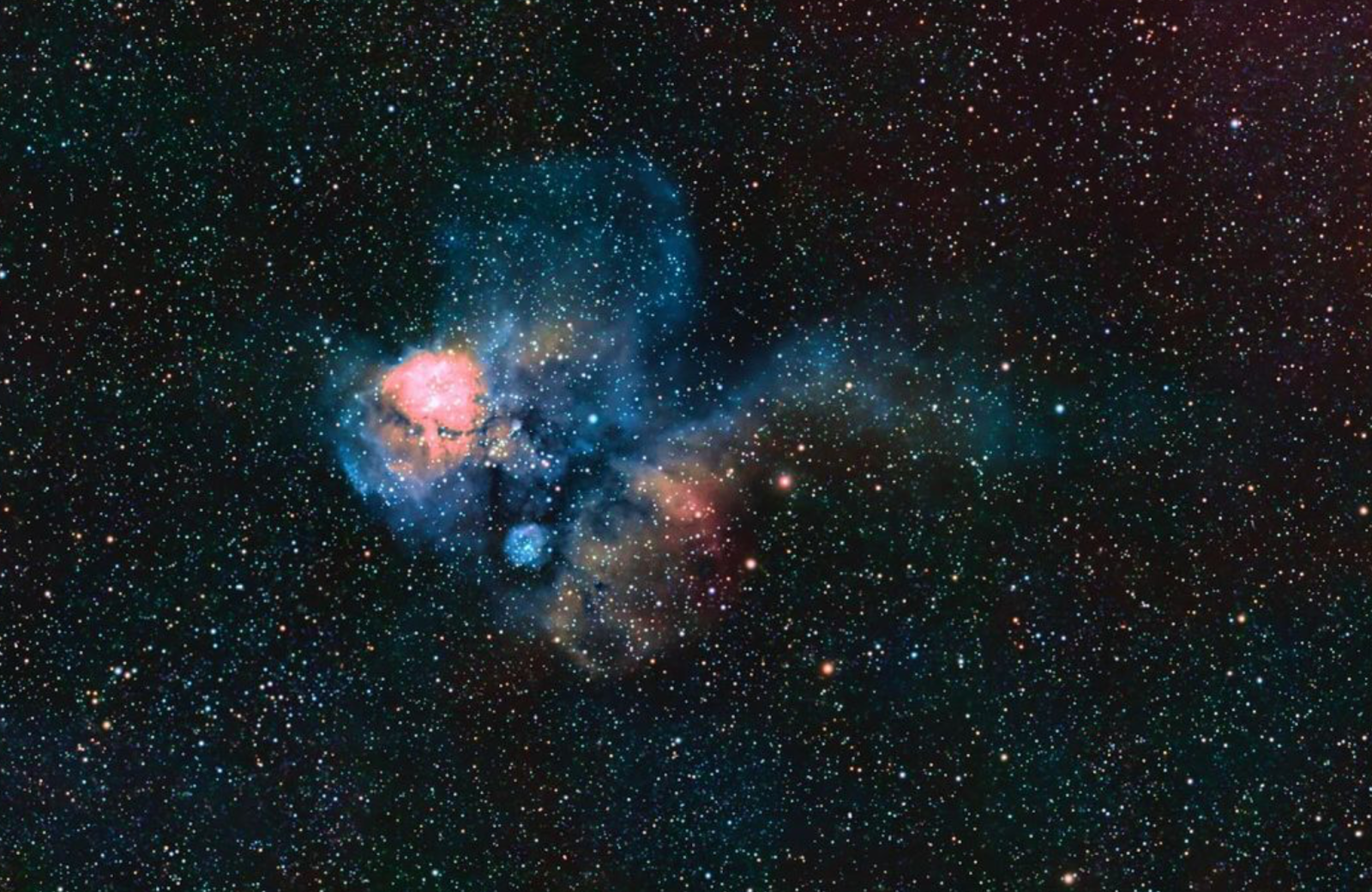
Looking up at the night sky from the open ocean is one of those experiences that rewires something deep inside you. No city glow, no rooftop obstruction, no noise, just you, the sound of water, and thousands of stars burning across a canvas you never knew existed. If you’ve ever dreamed of seeing the Milky Way with your own eyes, stargazing at sea might be the most powerful way to make it happen.
This guide is for beginners. You don’t need a telescope, an astronomy degree, or even a boat of your own. What you do need is curiosity, and a few key pieces of knowledge before you set sail.
Why Stargazing at Sea Gives You a Sky Like No Other
Light pollution is the silent enemy of the night sky. In most cities and towns, artificial light scatters into the atmosphere and washes out all but the brightest stars. From a typical urban rooftop, you might spot a handful of stars. From a dark-sky reserve, several thousand. But from the open ocean, far from any coast, the number rockets past what most people believe is possible.
The ocean offers what astronomers call a low horizon: there are no buildings, hills, or trees cutting into your field of view. You get a full 360-degree panorama of the sky, and the reflection of the stars on the water adds a surreal, almost meditative dimension to the experience.
Additionally, sea air is typically cleaner and less humid than inland air, which means less atmospheric distortion. Stars don’t twinkle as violently; they appear steadier, sharper, more real. For a beginner trying to identify constellations or simply soak in the spectacle, this makes everything easier and more rewarding.
The Best Way to See Stars Without Light Pollution: Go Offshore
If you’re serious about seeing a genuinely dark sky, getting offshore, even just a few nautical miles from the coast, makes a dramatic difference. Here’s why:
Distance from shore = distance from light sources. Most coastal towns, even small ones, emit enough glow to wash out the fainter stars near the horizon. Once you’re 5 to 10 miles out, that glow shrinks behind you, and the sky above starts to fill in with stars you didn’t even know were missing.
Some of the best destinations in the world for offshore stargazing happen to be in the Atlantic:
- The Canary Islands: Tenerife, Gran Canaria, El Hierro, and La Palma sit in a subtropical latitude with minimal cloud cover and exceptional dark-sky protection, especially in the southern and eastern coasts.
- Madeira: The trade winds that give the island its famous climate also sweep the sky clean of humidity and haze, creating brilliantly transparent nights.
- The Azores: Remote, volcanic, and sitting almost alone in the mid-Atlantic, the Azores combine dark skies with an oceanic horizon that feels infinite.
- Martinique: In the Caribbean arc, Martinique’s southern bays offer a rare meeting of tropical warmth, low light pollution, and stellar clarity.
These aren’t accidental choices. They’re where the Atlantic sky is genuinely dark, and where getting out on the water puts that darkness within reach.
Stargazing Tips for Beginners: What to Know Before You Board
1. Let Your Eyes Adapt to the Dark
This is the single most important stargazing tip for beginners, and the one most people ignore. Your eyes need time (roughly 20 to 30 minutes) to fully adjust to low light. During this period, a process called dark adaptation allows your pupils to dilate and your retinal cells to shift into a more sensitive mode.
Avoid looking at your phone, bright lights, or even a flashlight during this period. If you need light on board, use a red-light headlamp: red wavelengths don’t disrupt dark adaptation the way blue and white light do.
2. Choose the Right Night (Moon Phases Matter)
A full moon, while beautiful, is a natural form of light pollution. It can drown out thousands of faint stars, including most of the Milky Way. For the best results, plan your stargazing boat trip around the new moon, when the moon is below the horizon or too thin to cast significant light.
Check a moon phase calendar before booking your experience. New moon nights, or nights within 3-4 days of it, offer the darkest skies.
3. Know What You’re Looking For
You don’t need to memorize the entire sky — but a few key targets will give your experience focus:
- The Milky Way. From a dark ocean sky, it’s visible as a thick, luminous band stretching across the entire sky. In the Atlantic, the galactic core is best seen between April and October.
- Orion. One of the most recognizable constellations in both hemispheres. Look for the three-star belt.
- Scorpius. Dramatic and low on the horizon in the Atlantic, only visible on clear, dark nights.
- The Southern Cross. From the Canary Islands and Martinique, this iconic southern constellation becomes visible on clear nights, offering a star pattern most Europeans never get to see.
- Planets. Venus, Jupiter, and Saturn are often bright enough to spot with the naked eye and stunning through even a basic pair of binoculars.
4. Binoculars Beat Telescopes for Beginners at Sea
A telescope is tricky to use on a moving boat. Binoculars are far more practical, easier to handle, and actually reveal a surprising amount of detail: star clusters, the moons of Jupiter, the craters of our own Moon. A pair of 7×50 or 10×50 marine binoculars (the “50” refers to the wide lens aperture, ideal for low-light conditions) is the ideal beginner tool for stargazing on a boat.
5. Dress Warmer Than You Think
Even in the Mediterranean or the subtropical Atlantic, nights at sea can get surprisingly cold, especially once the boat is moving. Wind chill drops the felt temperature significantly. Bring an extra layer — a fleece or a light windproof jacket — even if the afternoon was warm. The last thing you want is to cut your sky session short because you’re shivering on deck.
How to Stargaze on a Boat: Practical Tips for a Safe and Comfortable Experience
Stargazing from a moving vessel introduces some unique challenges that don’t apply on land. Here’s how to handle them:
Lay flat when you can. Craning your neck upward for an hour is genuinely uncomfortable. Many sailing experiences offer flat deck space or blankets where you can lie back and look straight up. Take advantage of this — it transforms stargazing from a task into a total immersion.
Stay on the leeward side of the boat. The leeward side is sheltered from the wind. You’ll be warmer, more comfortable, and able to hold binoculars steadier.
Trust your guide. A professional astronomy guide on board changes the entire experience. Instead of squinting at a star chart trying to figure out which dot is which, you’ll have someone point out the stories behind the constellations, explain what you’re actually seeing, and answer every question you didn’t know you had. It turns a passive experience into an active, educational adventure.
Don’t rush. Some of the most powerful moments in ocean stargazing happen in silence, after you’ve stopped trying to identify things and simply let the scale of it sink in. The sky is big. Give it time.
The Unexpected Bonus: Bioluminescence
One of the most magical surprises of nighttime sailing is bioluminescence — the natural light produced by marine microorganisms called dinoflagellates. When disturbed by the hull of a boat or a swimmer’s movement, they flash a vivid electric blue.
On the right night, in the right waters, the wake of your boat can glow with cold blue fire while the stars burn above. It’s the kind of moment that’s impossible to photograph well but permanently imprinted on memory.
Ready to See the Atlantic Sky for Yourself?
You don’t need to plan an expedition or own a sailboat. At Atlantic Star Adventures, we’ve designed sailing and stargazing experiences specifically for people who want to see the sky the way it was meant to be seen — from the open ocean, under some of the darkest skies in Europe and the Atlantic.
From a traditional wooden boat off the coast of Madeira to a sleek catamaran under the stars of Gran Canaria, every experience includes expert guidance, onboard astronomy materials, and the kind of sky most people never get to see.
Explore our stargazing sailing experiences and find the one that calls to you.
The stars are already up there. All you have to do is get out of the city lights, and onto the water.