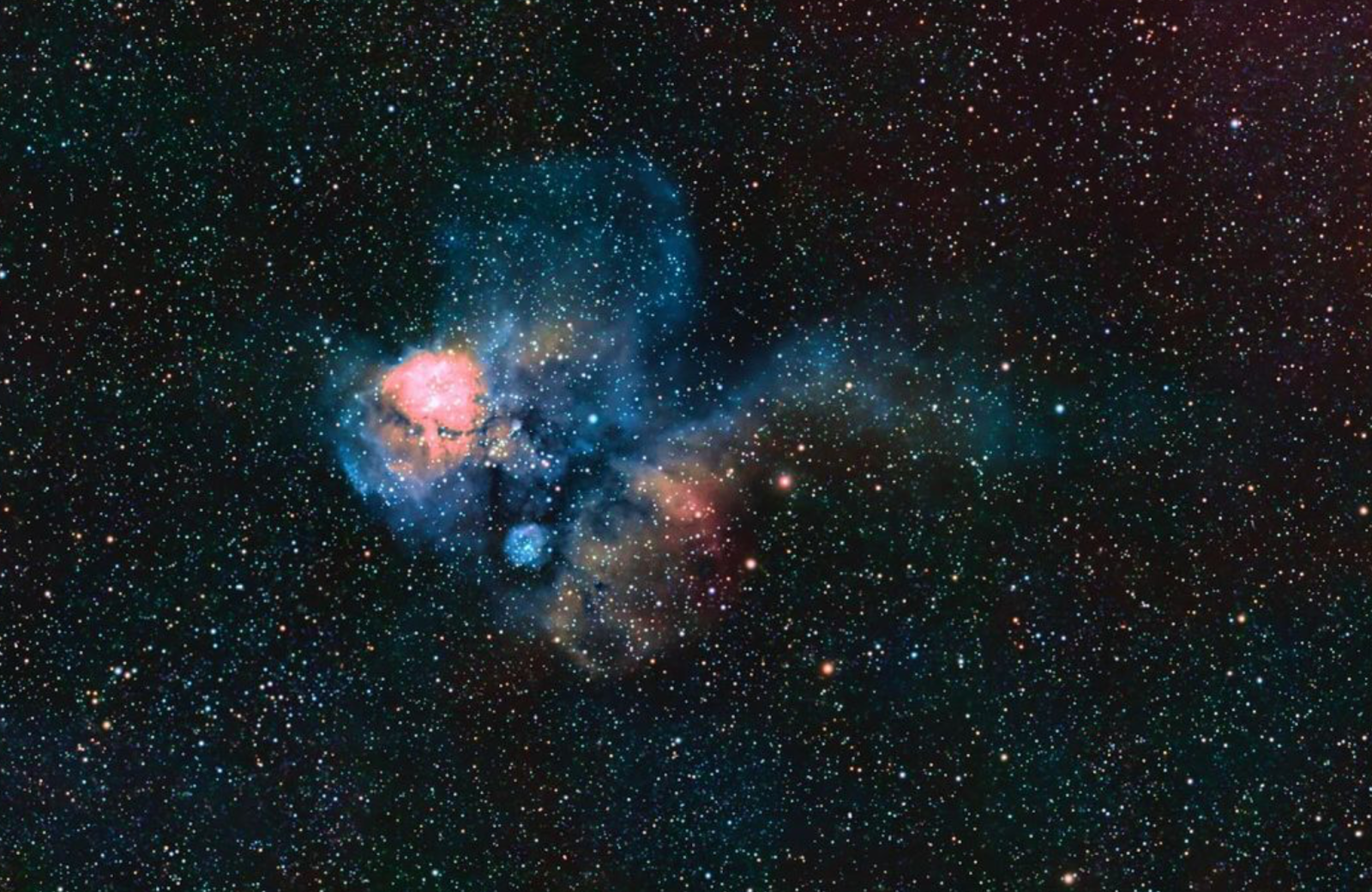
Located at around 14º north latitude, Martinique offers a radically different night sky from Atlantic Europe, with privileged access to southern sky objects. For European travelers, this low latitude is often the biggest surprise: familiar constellations appear distorted, lower, or partially hidden, while new regions of the sky take center stage.
For example, Ursa Major never fully rises with its seven main stars, and finding Polaris is easier by using Cassiopeia as a guide rather than relying on the classic northern references.
But what are the rest of the celestial events happening during the year in Martinique? Next, you will find an astronomical calendar for travellers that you cannot miss.
Meteor showers visible from Martinique in 2026
Eta Aquariids (May)
Far superior to European latitudes, with higher radiants and faster, brighter meteors.
Delta Aquariids (Summer)
One of the most important meteor showers from this latitude, offering consistent activity and long observing windows.
Perseids (August)
Still visible, although with lower radiants compared to northern destinations.
Unlike the Azores or Madeira, southern-hemisphere meteor showers gain prominence, making Martinique especially attractive for experienced observers.
Planets and the Milky Way
From Martinique:
-
Jupiter and Saturn reach very high, almost zenithal positions, ideal for detailed observation.
-
The galactic center of the Milky Way is visible for much of the year, offering spectacular naked-eye and photographic views.
The reduced atmospheric path length significantly improves contrast and sharpness.
Eclipses and special events
-
2026 solar eclipse visible as a partial eclipse from Martinique.
-
Lunar observations are notably vertical, with minimal atmospheric distortion.
Looking ahead, an annular partial solar eclipse will be visible from Martinique on January 26, 2028, further reinforcing the island’s long-term astronomical interest.
Caribbean skies, European travelers
Martinique is ideal for travelers seeking a truly different astronomical experience, framed by the Caribbean Sea and skies rarely seen from Europe. New constellations, near-zenith planets, and southern meteor showers make 2026 an exceptional year to explore the universe from this unique latitude.
If you wish to fully experience the wonders of the Caribbean night sky in Martinique, make sure to check our unique sailing and stargazing experiences here.